
Structured Estonians, hardworking Latvians and bold Lithuanians – how work cultures differ across the Baltics
2026/03/10
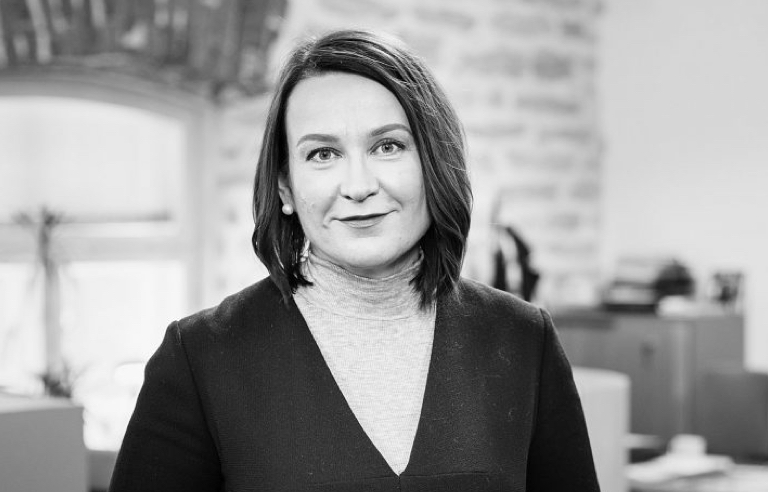
Irja Rae, Managing Partner, Figure Baltic Advisory
The Baltic region is often perceived as a single entity. For many foreign investors, Estonia, Latvia and Lithuania tend to blend into one whole. However, when working with people and organizations across all three countries, it becomes clear that behind this shared perception lie three rather distinct work cultures, experiences and approaches to problem-solving. We are united by similar values – education, stability and the desire to receive fair compensation – yet the ways in which we seek to achieve these goals can differ.
Small differences, big consequences
When comparing the economies of the Baltic states, it becomes evident that they are moving in the same direction, but at different speeds. According to Eurostat data from last year, Lithuania’s GDP per capita has reached 88% of the EU average, Estonia’s 79%, and Latvia’s 71%. In the medium term, Lithuania’s economic growth rate has been around 3% annually, while Latvia and Estonia have grown at roughly 2%. At first glance, the difference may appear to be only one percentage point, yet over the long term this can translate into a significant gap. It is also important to consider that business development in Estonia is strongly influenced by cooperation with Scandinavian countries, while Lithuania’s growth is supported by its close economic ties with Poland, helping currently position Lithuania as a regional leader in the Baltics.
However, economic development is only part of the story. Demographic trends show that since 2020 Estonia’s population has increased by 3.1%, Lithuania’s by 2.9%, while Latvia’s population has declined by 2.7%. Birth rates are low in all three countries (with fertility rates below 2.1): in Latvia it is 1.4, slightly higher than in Estonia (1.3) and Lithuania (1.2). At the same time, mortality among the working-age population remains too high, especially in Latvia. Reducing it to the level of more developed countries could save approximately 4,000 lives each year. Migration trends also reveal another challenge: Estonia and Lithuania have positive migration balances, while Latvia’s remains negative. This highlights that not only the number of people matters, but also their education, qualifications, skills and ability to create added value.
Everyone wants fair pay
One of the aspects that unites labour markets across our countries is the desire for fair compensation. This is not unique to the Baltics; it is also common across other EU countries. In discussions about the topic, a frequent question arises: is fair pay an economic or a psychological concept? The truth lies somewhere in between. On the one hand, if a company does not offer salaries that match the market level, the best specialists will move elsewhere. The same happens when employees feel undervalued for their results and the effort they invest in their work. On the other hand, fairness is not only about the number on a payslip, but also about trust, transparency and open dialogue between employees and employers regarding compensation.
Transparency in pay principles and reducing the gender pay gap – also required by the EU Pay Transparency Directive – should not be seen as a risk but as an opportunity. When employees understand how their compensation is determined, what criteria are used and how salary ranges are formed, trust increases. Of course, achieving complete equality is nearly impossible, yet conversations with managers and colleagues foster confidence that the organisation operates fairly and applies equal and just principles to everyone. And often this feeling is more important than the numbers on the salary slip.
Work culture – between structure and humanity
Baltic states share several features in their work cultures, including relatively horizontal structures, clear rules, and a long-term outlook. At the same time, there are some differences: Estonia is associated more with structure and clarity, Latvia with resilience and getting things done, and Lithuania with ambition and a forward-looking mindset. These perspectives do not contradict one another — if anything, they can be seen as complementary.
The future of the Baltic labour market does not depend on which country runs faster, but on how well we cooperate. Issues of fairness and transparency must become the norm rather than the exception. When asked whether we in the Baltics are similar or different, my answer is always the same – we are similar in our differences. We are united by the desire to live better, work smarter and feel respected. What differs is the path each country takes to get there. And if we learn from one another, our region will become more unified and stronger.